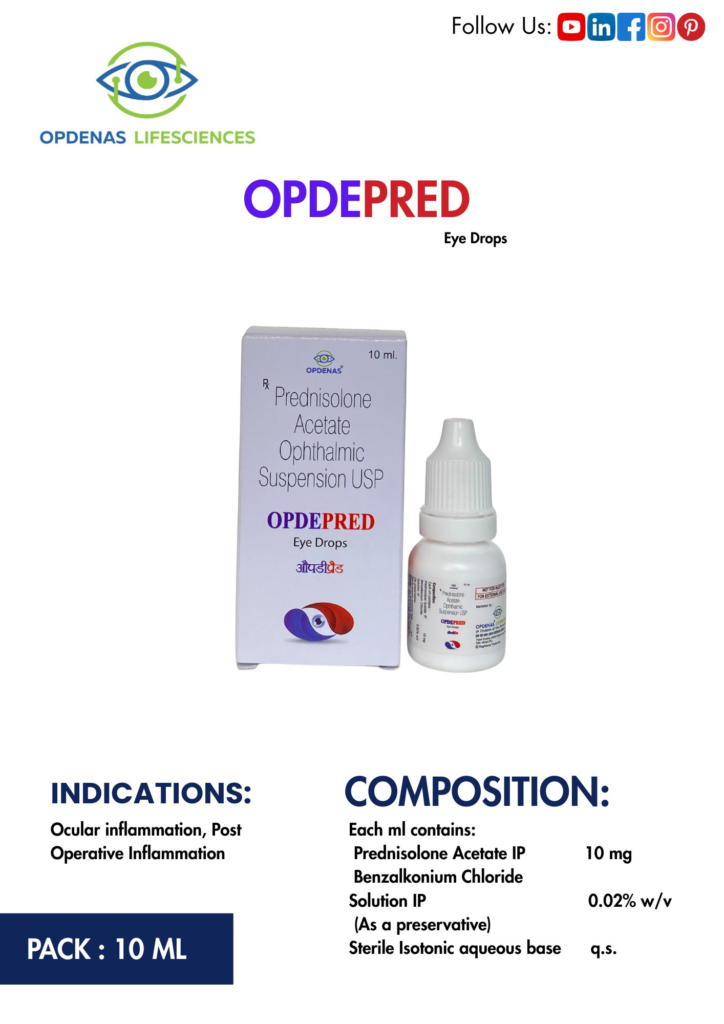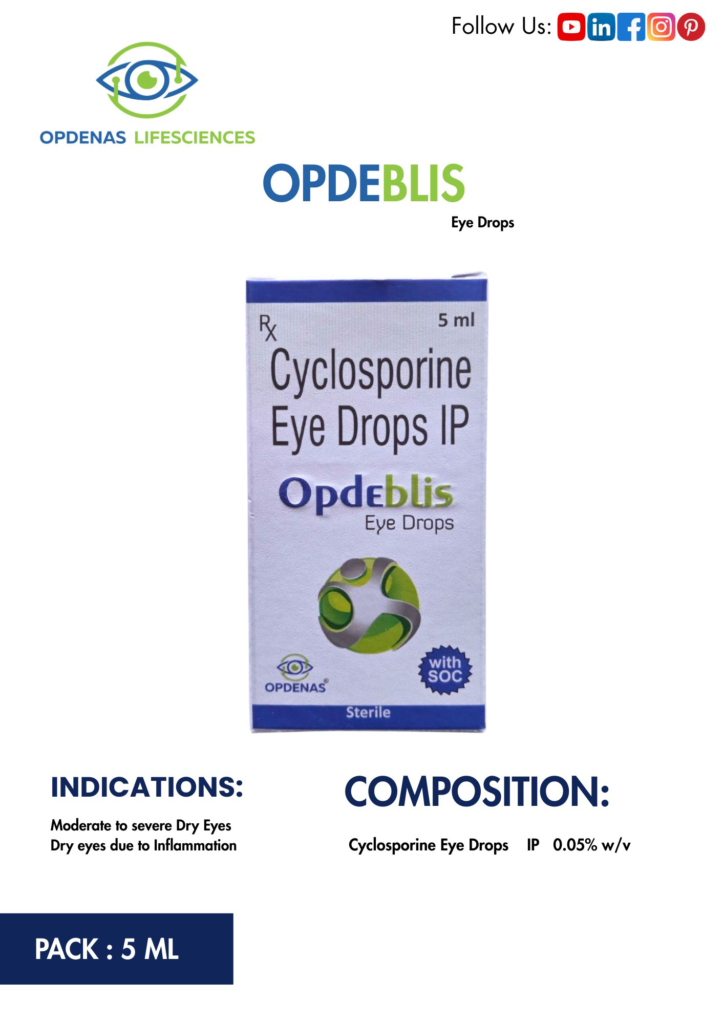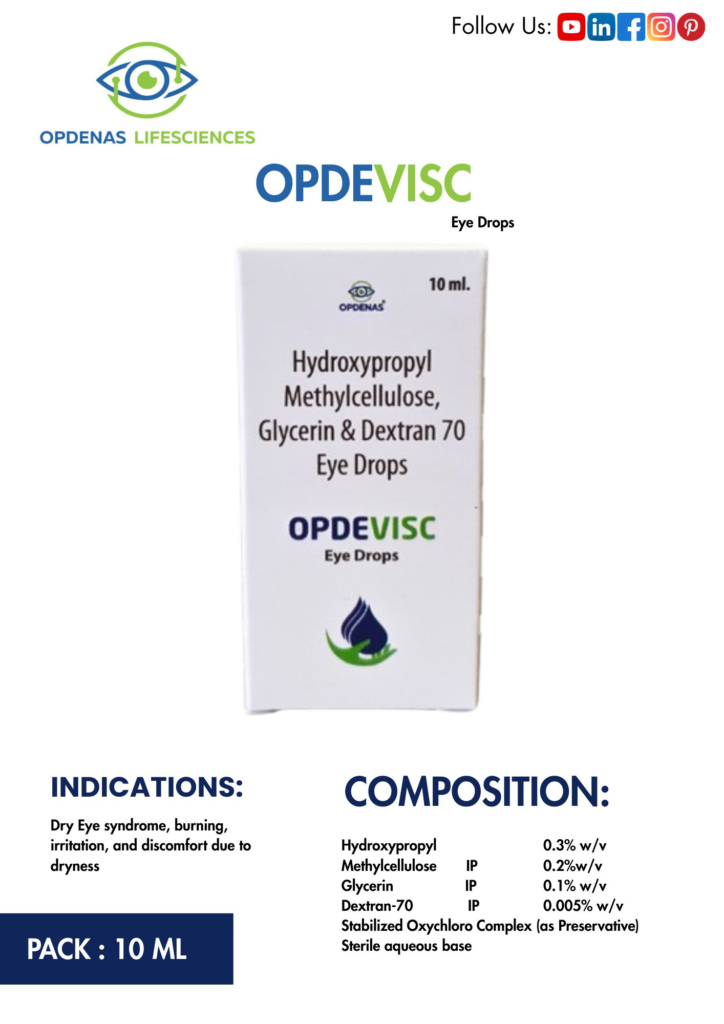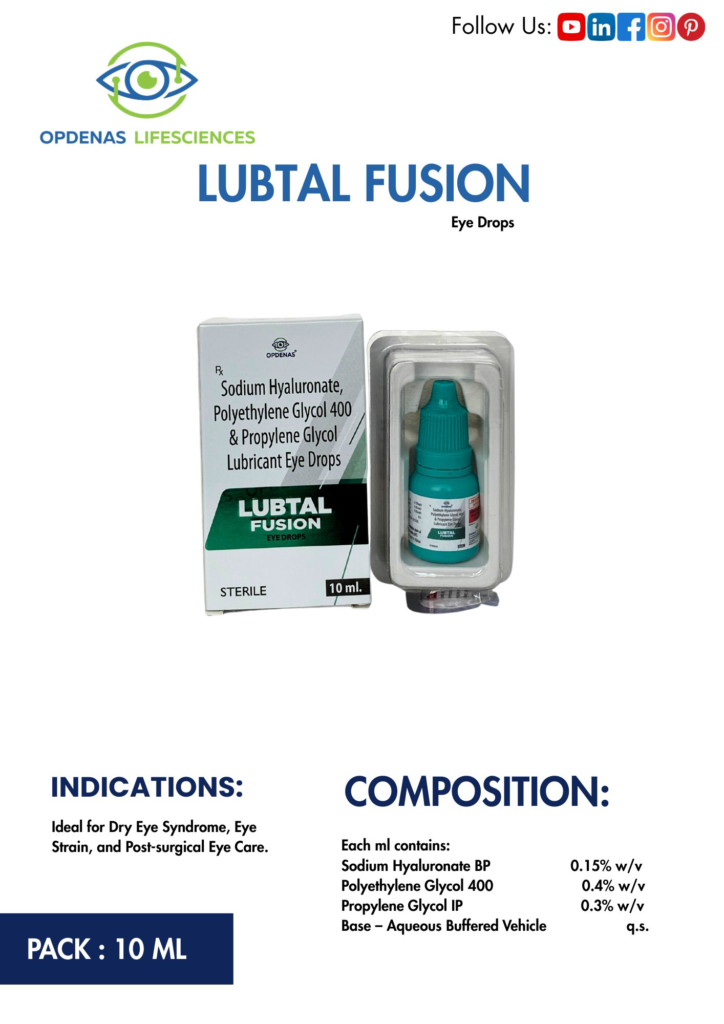


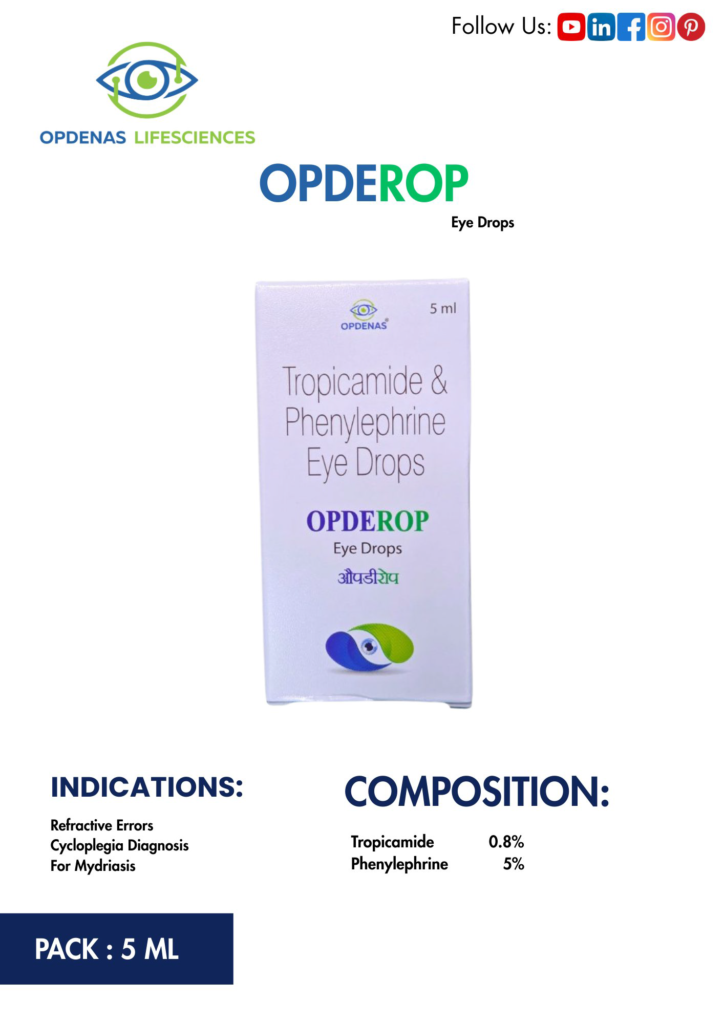
Opderop Eye Drops by Opdenas Lifesciences is a specialized ophthalmic formulation containing Tropicamide and Phenylephrine, designed to support effective pupil dilation during eye examinations and diagnostic procedures. It is widely used by eye care professionals for cycloplegic refraction and mydriasis.
This sterile eye drop formulation ensures quick onset of action, improved diagnostic accuracy, and enhanced patient comfort during ophthalmic evaluations and refractive assessments.
Key Features & Benefits
- Effective pupil dilation for ophthalmic examinations
- Combines Tropicamide and Phenylephrine for enhanced action
- Supports accurate refractive error diagnosis
- Useful for cycloplegic refraction procedures
- Fast-acting ophthalmic solution
- Helps ophthalmologists during retinal examinations
- Sterile and safe eye drop formulation
- Provides reliable mydriatic effect
- Convenient 5 ml pack for clinical use
- Trusted ophthalmic care solution from Opdenas Lifesciences
Composition
- Tropicamide – 0.8%
- Phenylephrine – 5%
- Sterile ophthalmic eye drop solution
- Pack Size: 5 ml
Indications
- Refractive error assessment
- Cycloplegia diagnosis
- Mydriasis (pupil dilation)
- Retinal examination procedures
- Pre-ophthalmic diagnostic evaluations
- Eye examinations requiring pupil enlargement
- Cycloplegic refraction in ophthalmology
- Diagnostic eye care procedures
Possible Side Effects
- Temporary blurred vision
- Mild burning or stinging sensation
- Sensitivity to light
- Eye irritation or redness
- Headache
- Temporary increase in eye pressure
- Watery eyes
- Dryness in eyes
Use only under the supervision of a qualified ophthalmologist or healthcare professional.
How It Works
Opderop Eye Drops combine Tropicamide, which relaxes the eye muscles to dilate the pupil, and Phenylephrine, which stimulates the dilation of the pupil by constricting blood vessels in the eye. Together, they provide effective mydriasis and cycloplegia for accurate eye examinations and diagnostic procedures.
Directions for Use
- Wash your hands before using the eye drops.
- Instill the prescribed number of drops into the affected eye(s).
- Avoid touching the dropper tip to any surface.
- Keep the eyes closed for a few seconds after application.
- Use only as directed by an ophthalmologist.
- Avoid driving or operating machinery immediately after use due to temporary blurred vision.
- Store in a cool and dry place away from sunlight.
Frequently Asked Questions
1. What are Opderop Eye Drops used for?
Opderop Eye Drops are used for pupil dilation during eye examinations and diagnostic procedures.
2. What is the composition of Opderop Eye Drops?
It contains Tropicamide 0.8% and Phenylephrine 5%.
3. Why are these eye drops used before eye checkups?
They help dilate the pupils, allowing ophthalmologists to examine the retina and internal eye structures properly.
4. Can Opderop Eye Drops cause blurred vision?
Yes, temporary blurred vision may occur after application.
5. How long does pupil dilation last after using Opderop Eye Drops?
The effect may last for several hours depending on individual response.
6. Are these eye drops safe for children?
Use in children should only be under medical supervision.
7. Can I drive after using Opderop Eye Drops?
Avoid driving until your vision becomes clear again.
8. What are the common side effects of Opderop Eye Drops?
Mild irritation, sensitivity to light, and blurred vision are common temporary effects.
9. How should Opderop Eye Drops be stored?
Store below room temperature in a dry place and keep away from direct sunlight.
10. Who manufactures Opderop Eye Drops?
Opderop Eye Drops are manufactured and marketed by Opdenas Lifesciences.
Conclusion
Opderop Eye Drops by Opdenas Lifesciences provide a reliable ophthalmic solution for effective pupil dilation and cycloplegic diagnosis. With the powerful combination of Tropicamide 0.8% and Phenylephrine 5%, these eye drops support accurate refractive assessments and retinal examinations. Their fast-acting and sterile formulation makes them an essential choice for ophthalmic diagnostic procedures.